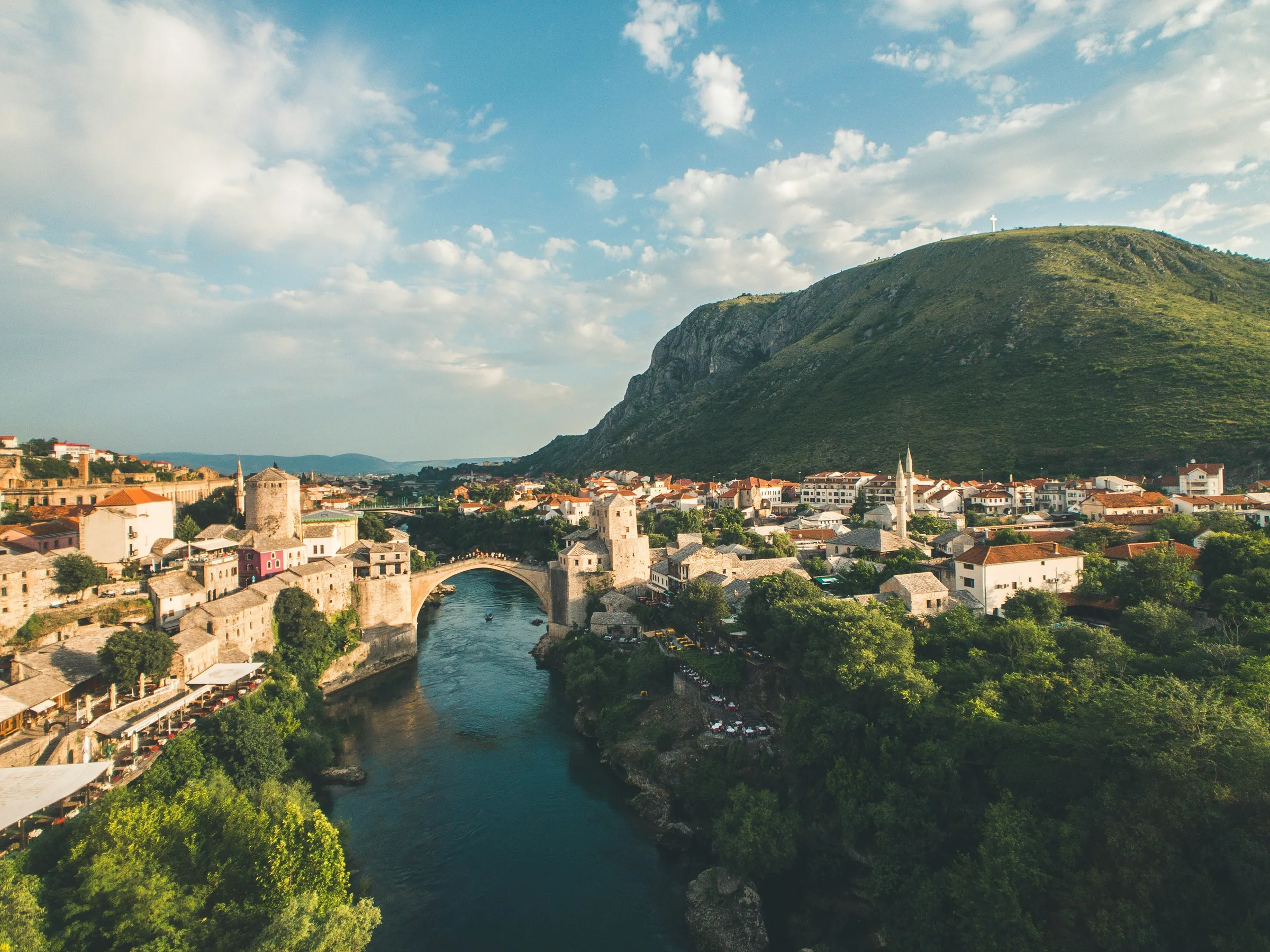
4-Day Herzegovina & Pelješac Wine Tour
Sarajevo to Dubrovnik, both directions

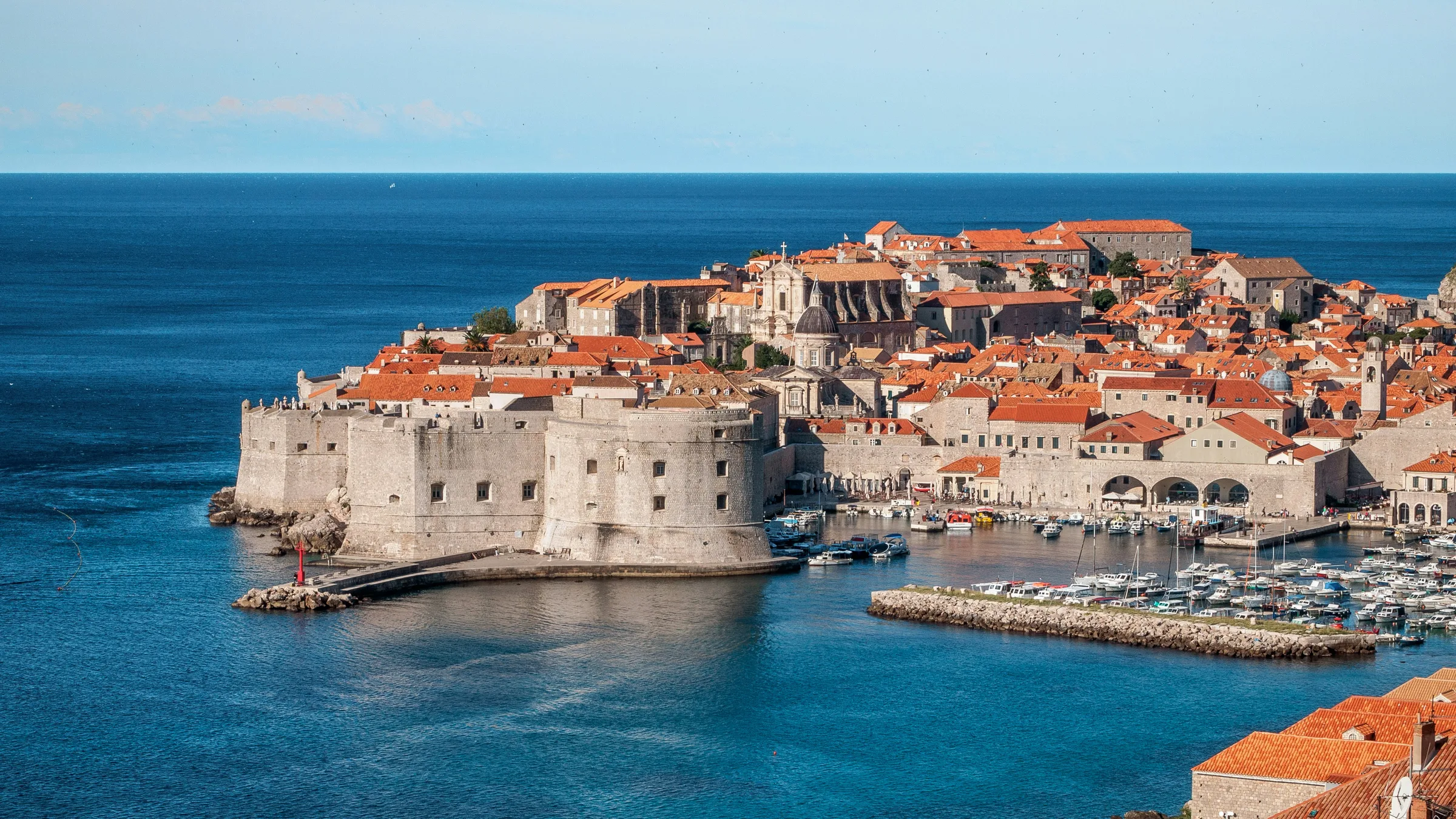
About this journey
Four days along a single limestone spine, from the Neretva valley to the Adriatic. Herzegovina's wine is grown on rock — in places the vineyards were cut out of bare karst because there was no soil to plough — and that constraint produces a white with a mineral edge that exists nowhere else.
This journey follows the geology southwest until it meets the sea: Mostar, the Brotnjo plateau, Stolac, Trebinje, and the terraced slopes of Pelješac. Seven cellars, two UNESCO sites, one continuous rock.
Five grapes, one limestone spine.
Žilavka — the white, and Herzegovina's calling card. Around 60% of the region's production. Crisp, mineral, citrus and stone fruit, dry.
Blatina — the red, roughly a quarter of production. Full-bodied and dark-fruited, with an austerity its Croatian neighbours don't have. It cannot fruit without another variety planted beside it, which shapes how every grower here plans a vineyard.
Trnjak — nearly extinct a generation ago, now recovering through a handful of producers.
Vranac — "black horse". Arrived in southern Herzegovina under Austria-Hungary. Big, tannic, long-lived, and what Trebinje is known for.
Plavac Mali — Pelješac. On the steep south-facing slopes above Potomje it becomes Dingač, Croatia's first protected appellation, designated in 1961.
You unpack twice, not four times: two nights in Mostar, one in Trebinje. The second day runs out of Mostar and back, so there is no packing in the middle of the journey.
The journey runs in both directions — Sarajevo to Dubrovnik, or Dubrovnik to Sarajevo. The content is identical. Book whichever matches your flights.
Activities & experiences
Seven Cellars
Žilavka, Blatina, Vranac and Plavac Mali — each one tasted where it is grown.
Two Monasteries, Opposite Fates
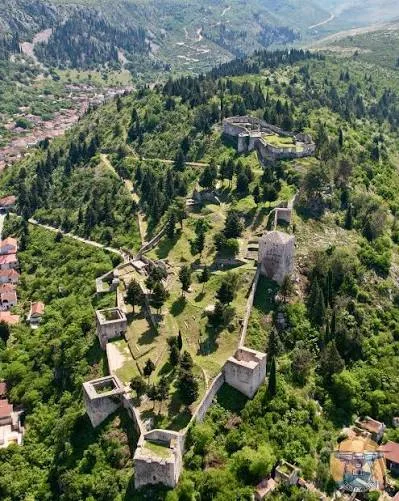
Žitomislići, destroyed in 1992 and rebuilt; Tvrdoš, making wine without interruption since the 15th century.
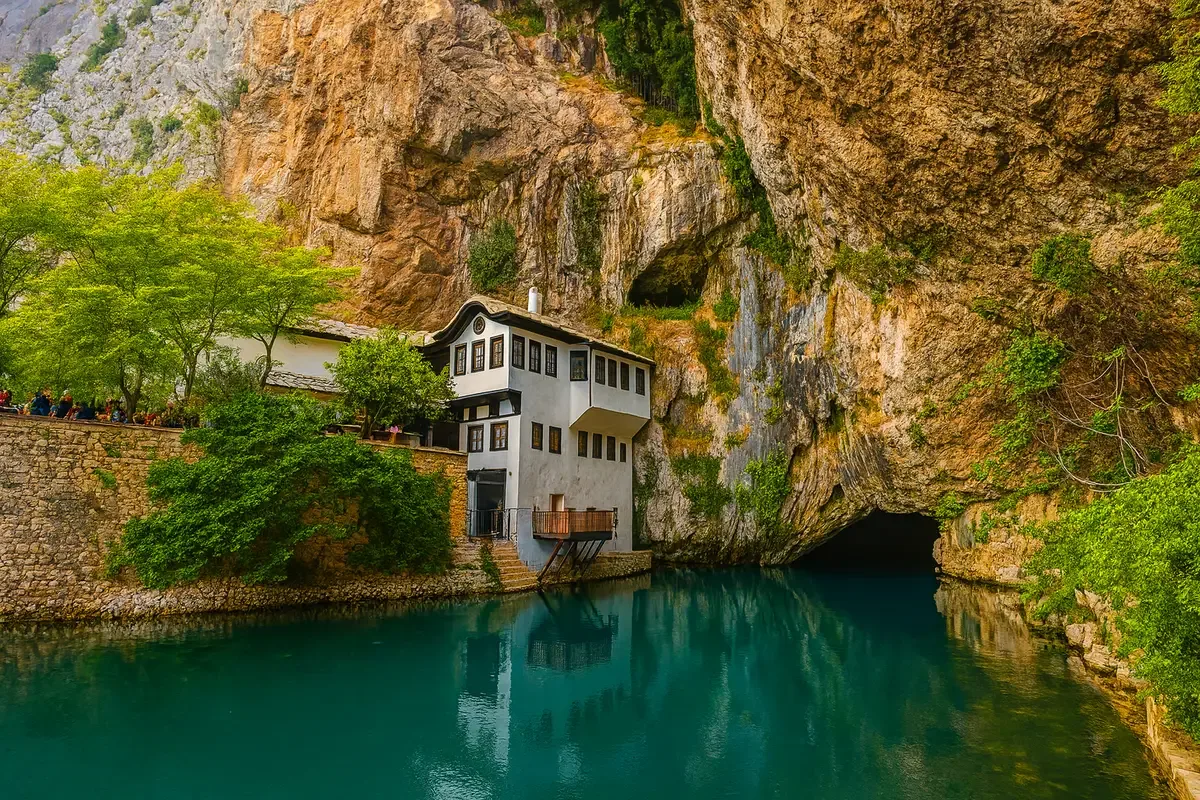
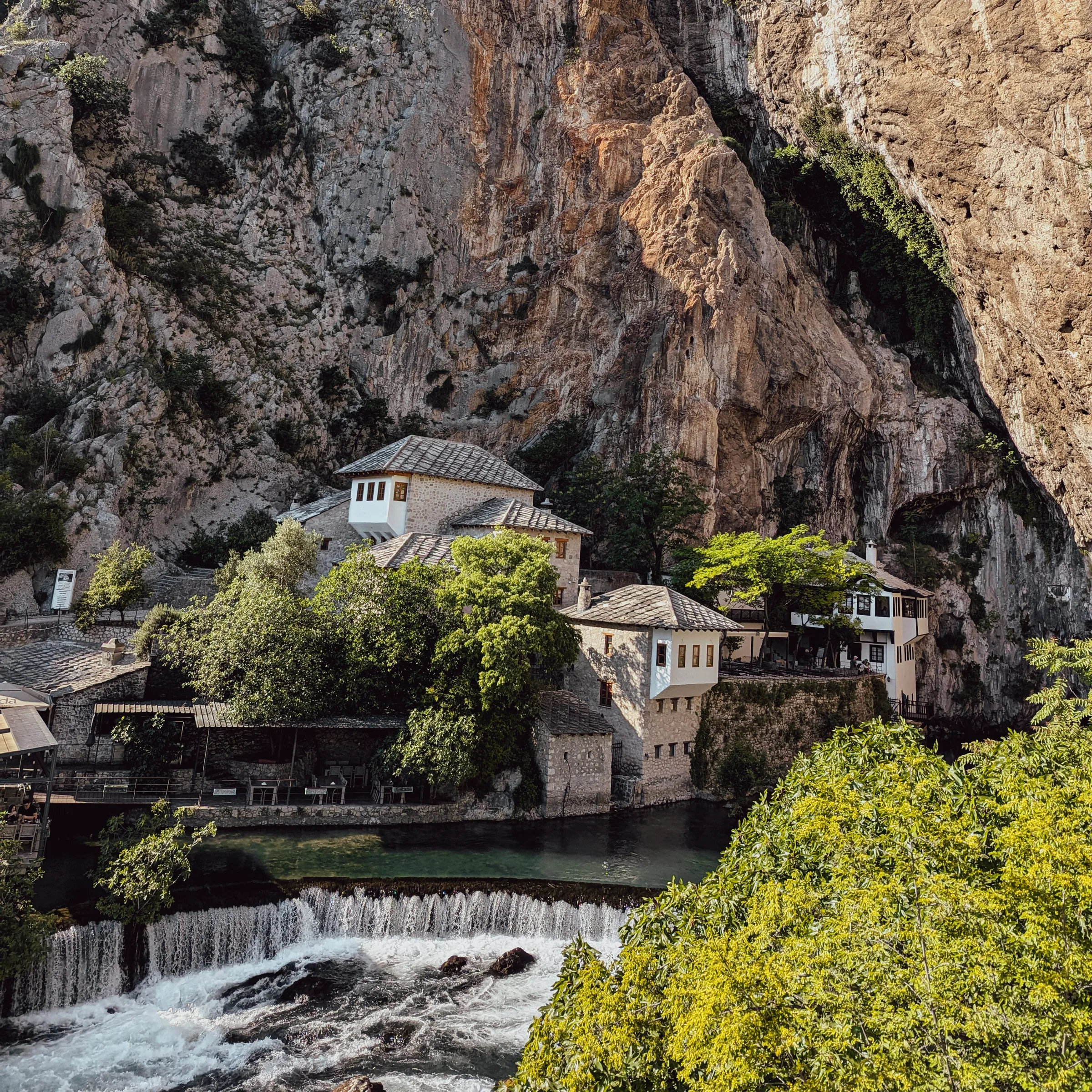
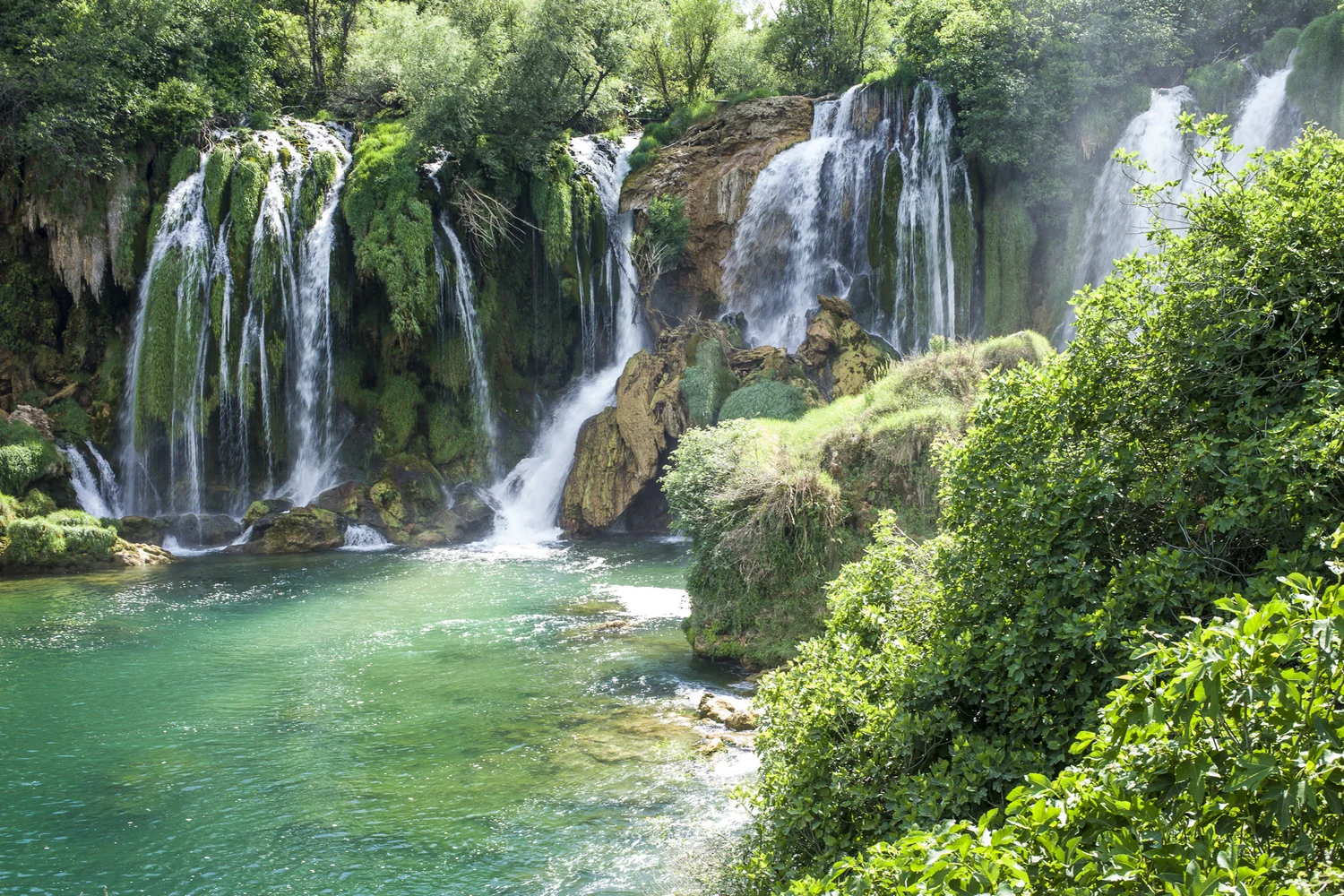
The Buna Spring at Blagaj
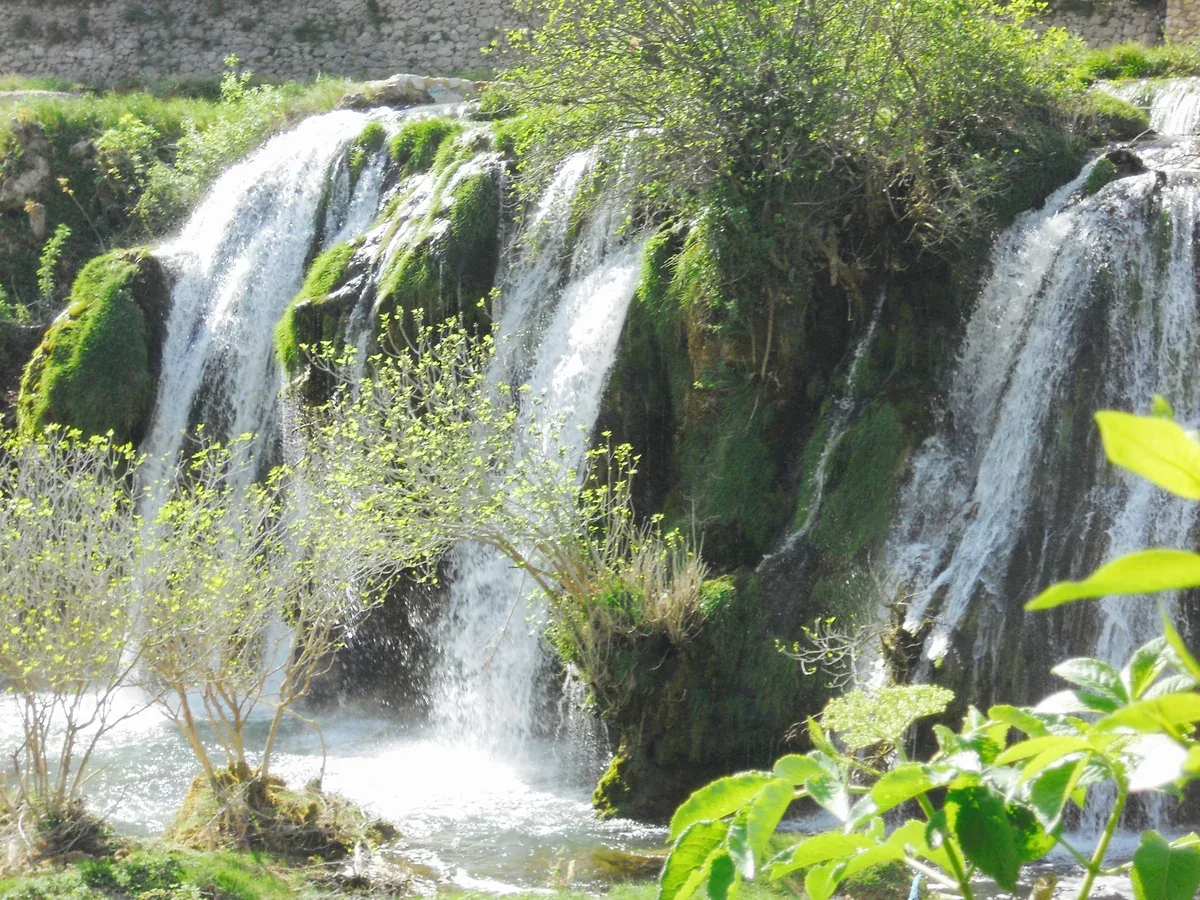
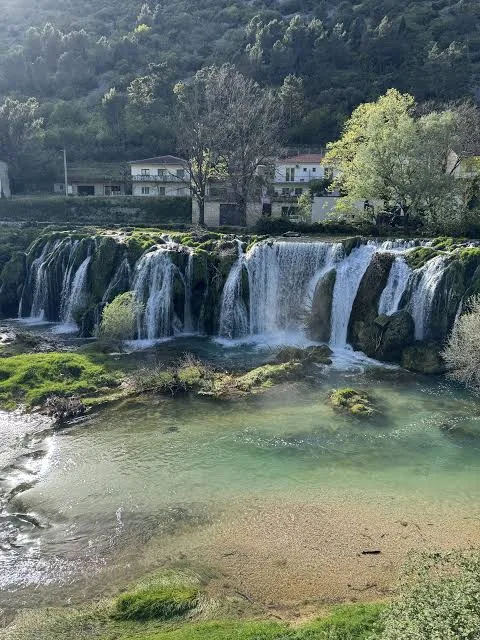
A river arriving out of a cliff face at one of Europe's largest karst springs, with a dervish lodge built beside it around 1520.
Radimlja Necropolis
UNESCO-listed, and vines carved into medieval stone by masons who knew what a vine looked like.
Oysters at Mali Ston
Lunch at the source, harvested in the bay in front of you.
The Dingač Road
Terraced vineyards on slopes steep enough to be worked by hand, and the tunnel cut through to the coast.
The route
4 stops · 4 days · Sarajevo / Mostar to Ston / Pelješac / Dubrovnik
Day by day itinerary
We leave Sarajevo mid-morning — late enough to take guests arriving on a same-day flight, and there is no cellar on this leg to be late for. The road south follows the Neretva down through its canyon, and we stop to stretch and take a coffee where the valley opens out.
Midday is lunch at a working vineyard estate in the hills southeast of Mostar, and with it the orientation tasting: two whites, two reds, no vineyard walk. Guests arrive with no reference points for Žilavka or Blatina, and one short structured flight at the start means everything over the next two days lands against a baseline instead of a blank page.
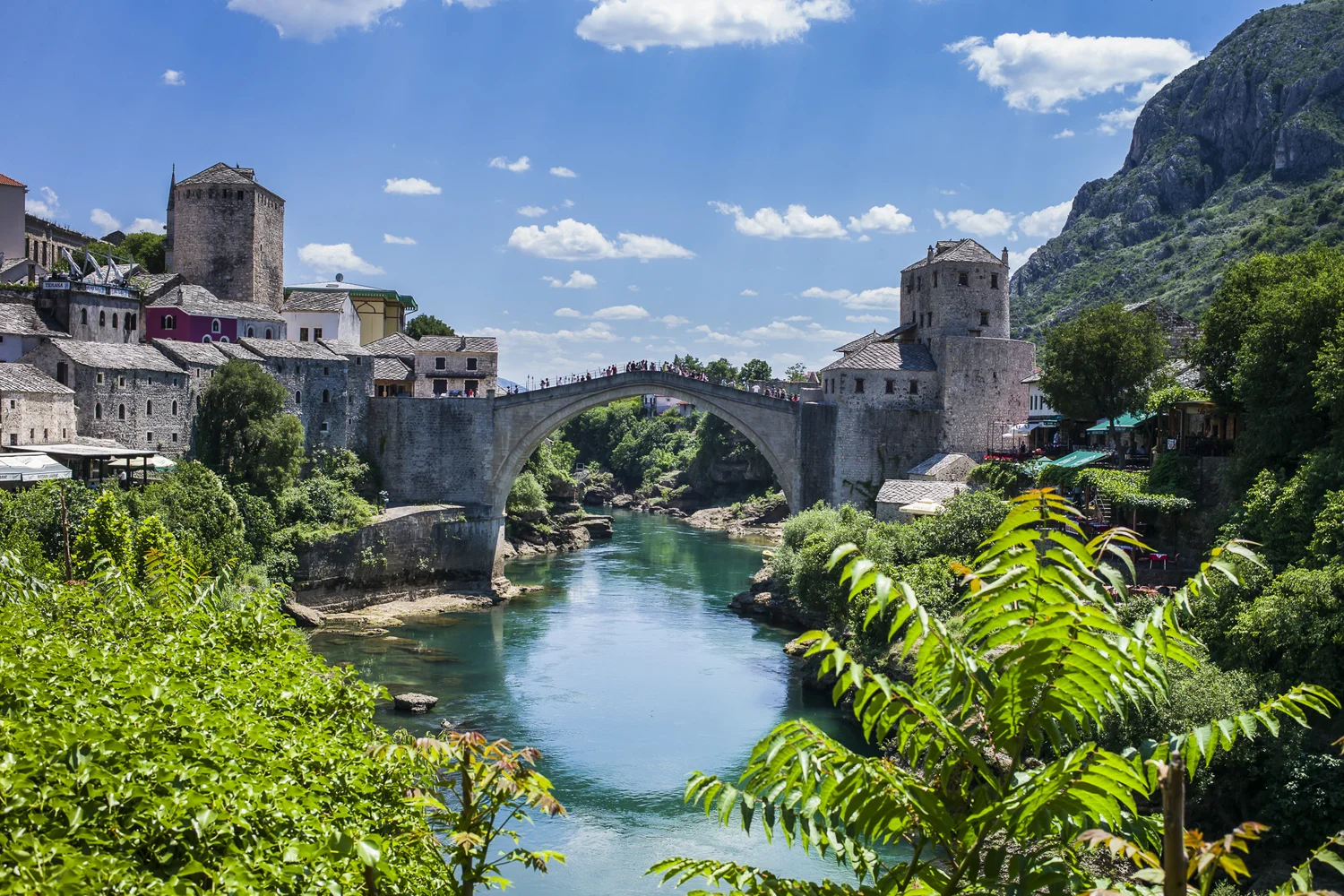
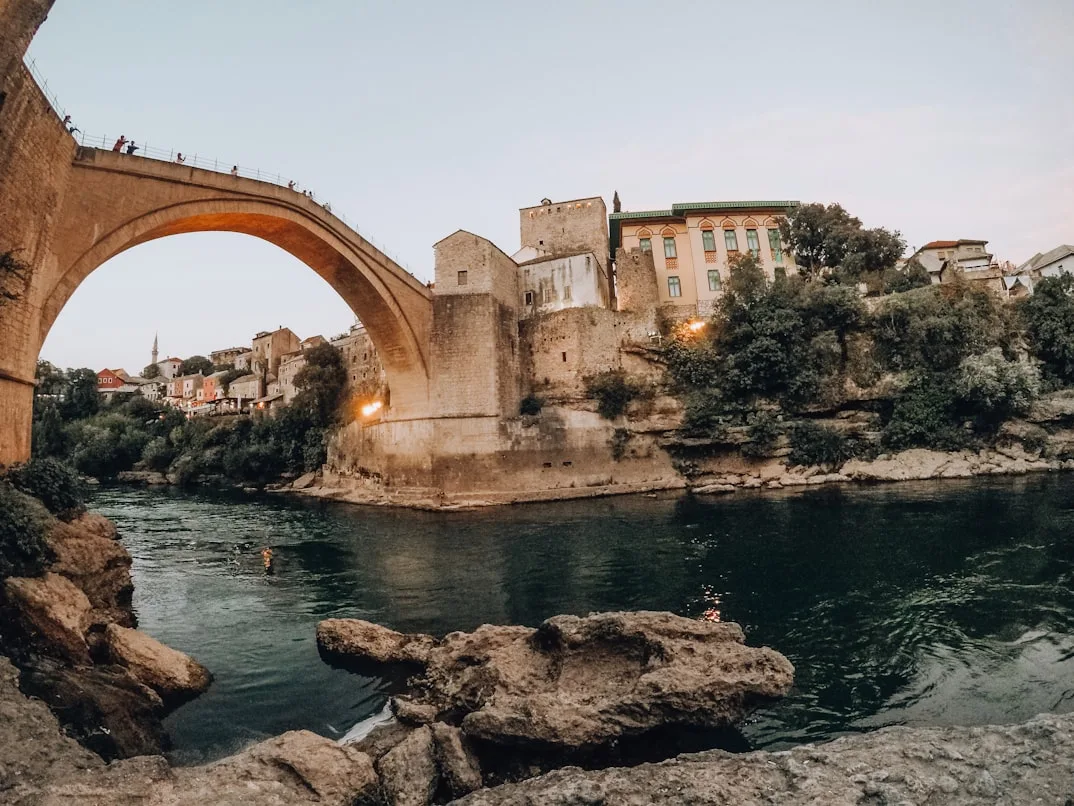
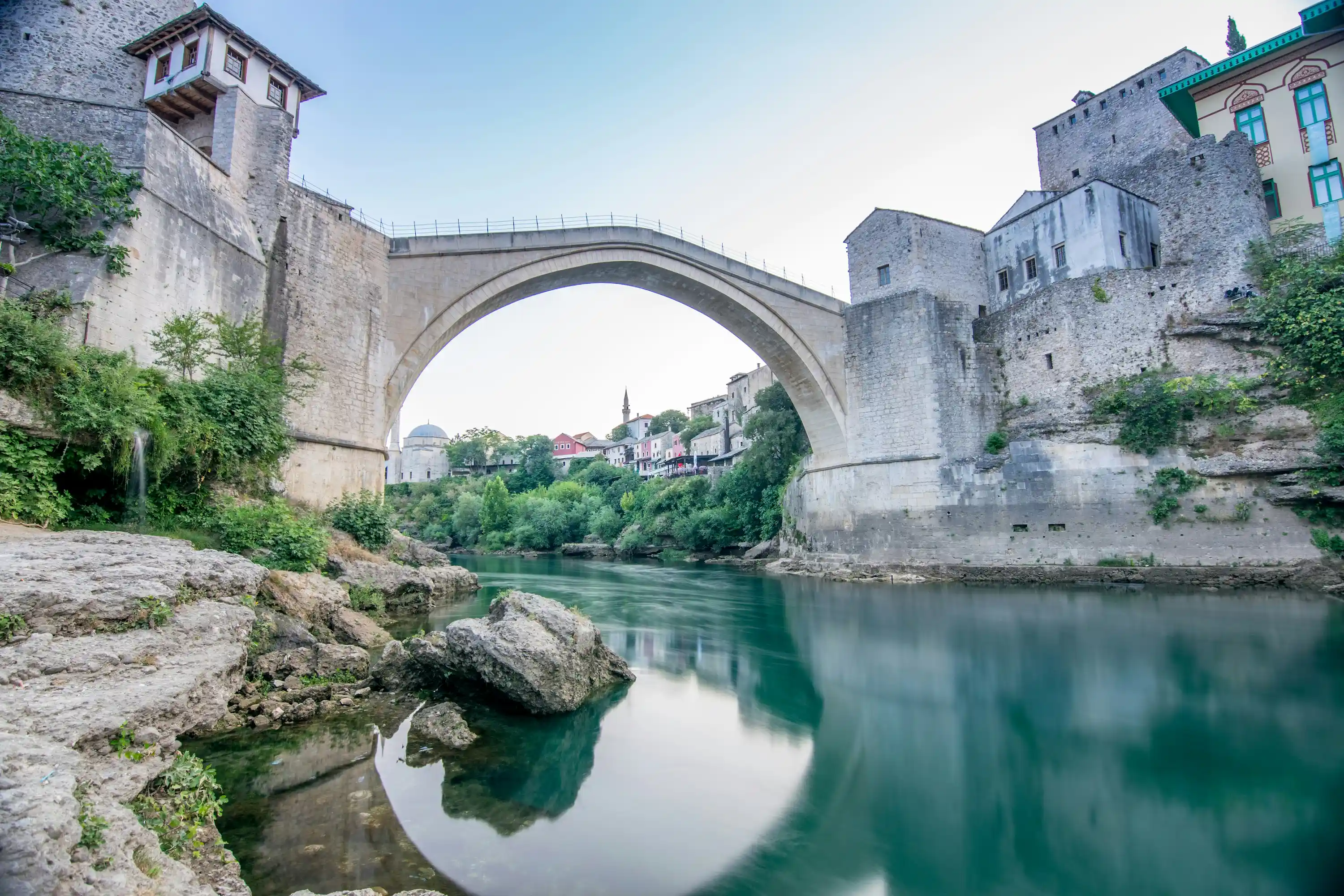
Then into Mostar and into your hotel — where your bags stay, because you are in this room for two nights. There is time to rest before a guided walk through the old town: Stari Most, the Kujundžiluk bazaar and the Ottoman quarter.
Dinner is in Mostar, at a table chosen for how its cooking sits with the wine of the region. Ask for the japrak — stuffed vine leaves, off the same plant as everything you have been drinking.
A river arriving out of a cliff face, a monastery destroyed and rebuilt, two Brotnjo cellars — and back to the same room in Mostar.
A family cellar on the Stolac road, vines carved into medieval tombstones at Radimlja, and Vranac on the Vukoje rooftop.
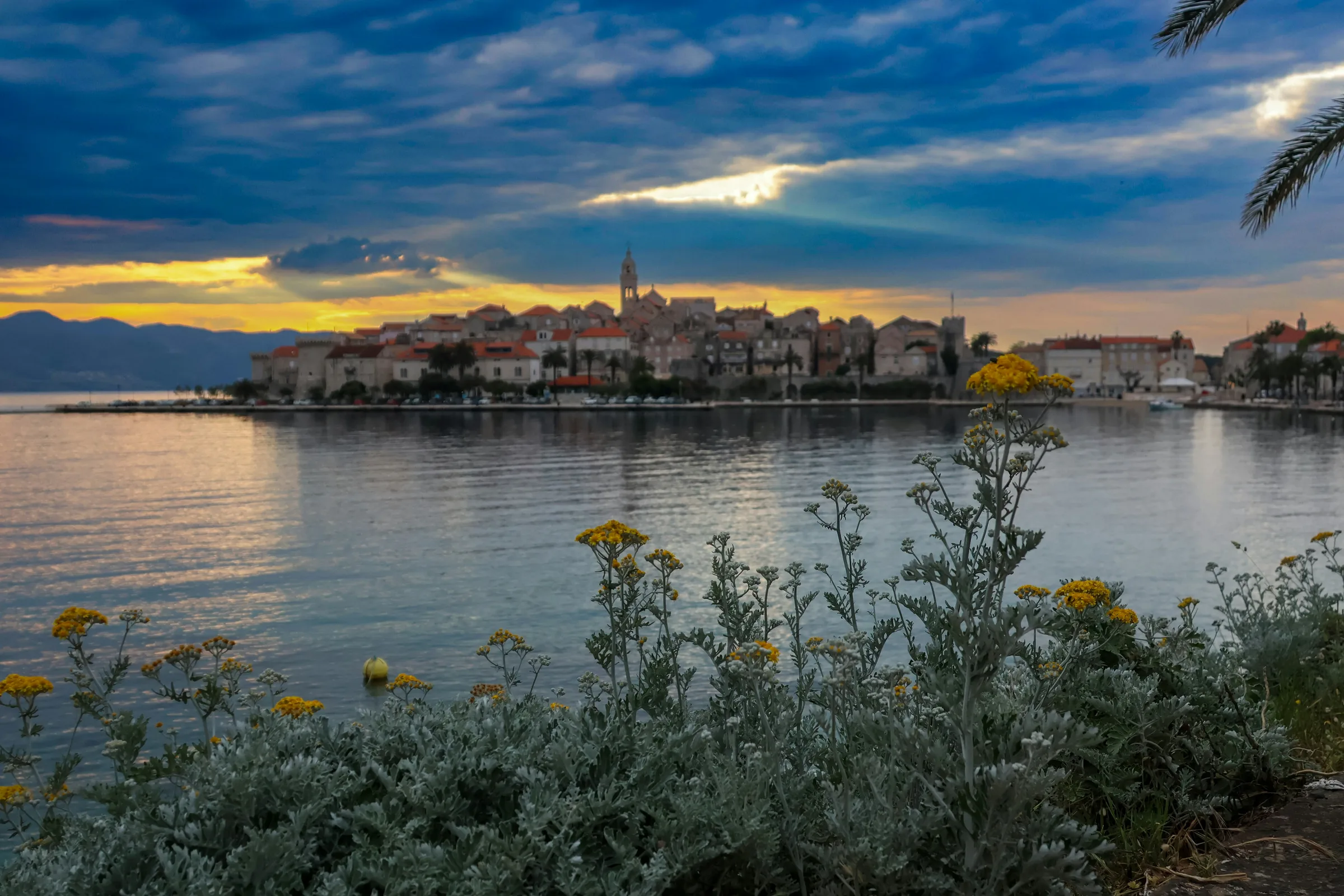
Monastery cellars at first light, the border, Ston's walls, oysters at Mali Ston, and the Dingač road down to the Adriatic.
The final day runs Trebinje to Dubrovnik by way of Ston and the Pelješac peninsula, and it is the only demanding one of the four — the better part of it is spent in the vehicle, after three days of tasting. The early start and the lunch at Mali Ston rather than on Pelješac proper are both there to absorb it. The middle two days are short hops.
Blagaj is reached on uneven stone paths, vineyard walks are on rough ground, several cellars are entered by stairs, and the Ston city walls are a steady climb in full sun. None of it is technical, and the walls can be skipped without losing the day.
What's included
Is this trip right for you?
This trip is for you if…
This trip may not be right if…
Accessibility & Suitability
What to expect physically, and who this experience suits best.
Is this for you?
You should be able to
- Climb a flight of stairsSeveral cellars, the Blagaj tekke, and the Ston city walls.
- Carry own luggageOne hotel change across the four days.
- Walk on uneven groundVineyard walks, the stone paths at Blagaj, and old-town cobblestones.
Terrain
Mostly seated travel between stops, with vineyard walks on uneven stony ground, cobbled old towns in Mostar, Stolac and Trebinje, uneven stone paths at Blagaj, cellar stairs, and a steady climb on the Ston city walls.
Good to know
The cellars and monasteries are rural sites with variable access — tell us your requirements when you enquire and we will confirm what each stop can do. Žitomislići and Tvrdoš both require shoulders and knees covered.
Important Information
Cancel more than 30 days before departure for a full refund of everything paid; 15–30 days before, 50%; within 15 days, no refund. One free date change if requested more than 30 days out. If we cancel, you always get a full refund or a free rebooking — full details under Booking Conditions. Send a booking request, and you will hear back within 24 hours to confirm availability and arrange all details.
Frequently asked questions
What guests say
Stories from this trip

More journeys
View all journeys →
All guiding, transport & experiences — you arrange your stays.
A 25% deposit secures your places — the balance is due 30 days before departure.