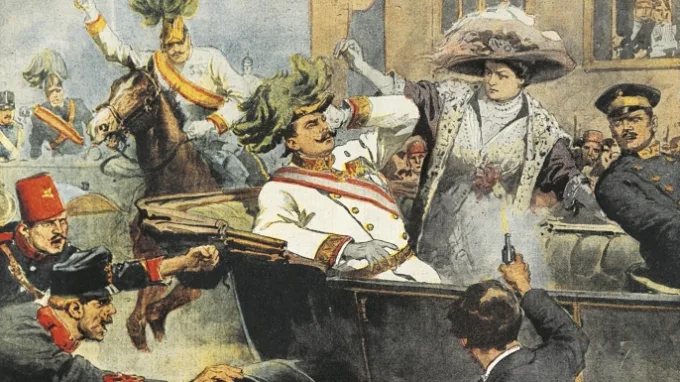
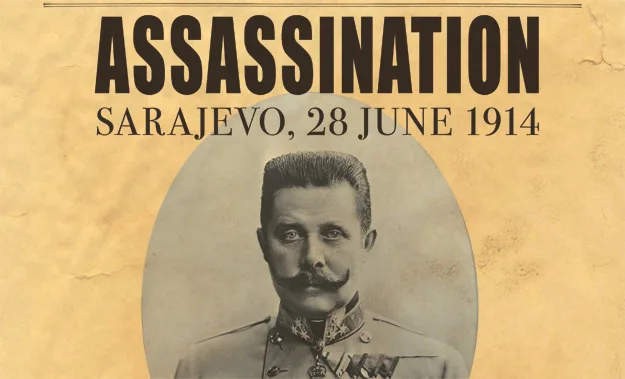
On 28 June 1914, a 19-year-old Bosnian student fired two shots on a Sarajevo street corner and triggered a chain of events that killed 20 million people. This is the full story of how it happened — and why it happened here.
On the morning of 28 June 1914, Archduke Franz Ferdinand — heir to the Austro-Hungarian throne — arrived in Sarajevo for an official visit. By early afternoon he was dead. Within six weeks, Europe was at war. Within four years, four empires had collapsed, 20 million people were dead, and the map of the world had been redrawn from scratch.
It all began on a bridge in a small Balkan city that most of Europe had barely heard of.
The City Before the Shot
To understand what happened in Sarajevo in 1914, you need to understand what Sarajevo was in 1914.
Bosnia and Herzegovina had been under Austro-Hungarian administration since 1878 and formally annexed in 1908 — a move that deeply angered Serbia and triggered a wave of Slavic nationalist sentiment across the region. Sarajevo was a city of layered tensions: Ottoman architecture and Austro-Hungarian boulevards, Catholic spires and minarets, a population of Bosnian Muslims, Orthodox Serbs, Catholic Croats, and Sephardic Jews living in proximity that was sometimes harmonious and sometimes anything but.
The annexation had produced exactly the conditions in which a nationalist movement could grow. And it had.
The Black Hand & Gavrilo Princip
The assassination was not a spontaneous act. It was planned — imperfectly, chaotically, but planned — by a network of Bosnian Serb nationalists with connections to a Serbian secret society known as the Black Hand. Their goal was the unification of South Slavic peoples under Serbian leadership and the end of Austro-Hungarian control over Bosnia.
Six assassins positioned themselves along the Appel Quay — the route the Archduke's motorcade was scheduled to take through the city. The first attempt failed. A bomb thrown at the Archduke's car bounced off and exploded under the vehicle behind it, injuring several people. The other conspirators lost their nerve or their opportunity. The motorcade accelerated and continued.
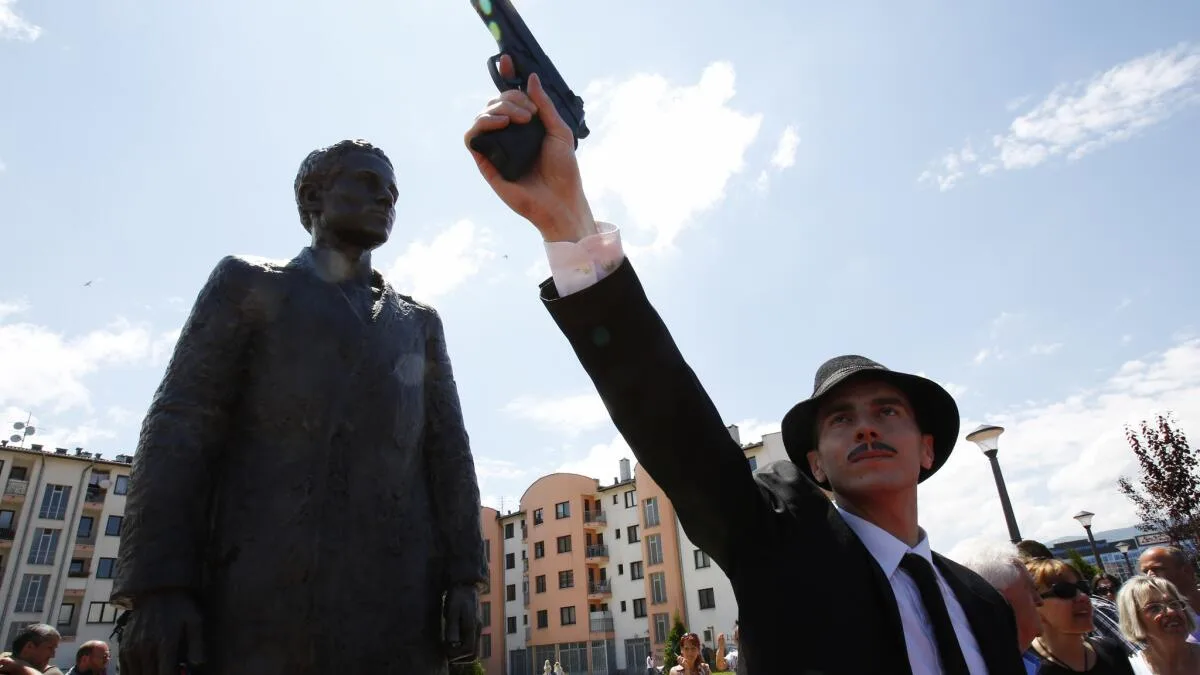
Gavrilo Princip, 19 years old, assumed the attempt had failed and walked to a nearby delicatessen on Franz Josef Street to collect himself.
"I am a Yugoslav nationalist, aiming for the unification of all Yugoslavs, and I do not care what form of state, but it must be free from Austria." — Gavrilo Princip, at his trial, 1914
The Wrong Turn That Changed History
What happened next has been debated, reconstructed, and retold more times than almost any other moment in modern history — because it turned on a mistake.
The Archduke, shaken but unharmed, insisted on visiting the hospital to check on those injured in the bomb attack. His route was changed. His driver was not informed of the change. Taking a wrong turn onto Franz Josef Street, the driver was corrected and stopped the car to reverse — directly in front of Gavrilo Princip, who was standing outside the delicatessen less than two metres away.
Princip stepped forward and fired twice. The first shot hit the Archduke's wife, Sophie, in the abdomen. The second hit Franz Ferdinand in the jugular vein. Both were dead within the hour.
The Six Weeks That Ended a World
The assassination set off a diplomatic crisis that moved faster than anyone could contain. Austria-Hungary blamed Serbia and issued an ultimatum designed to be rejected. Serbia accepted most of its terms — but not all. Austria-Hungary declared war on Serbia on 28 July 1914, exactly one month after the assassination.
What followed was the activation of a system of alliances that pulled the entire continent in within days.
- Russia mobilised in support of Serbia
- Germany declared war on Russia
- Germany declared war on France and invaded through Belgium
- Britain declared war on Germany in response to the invasion of Belgium
- The Ottoman Empire entered on the side of Germany
- The Austro-Hungarian, Russian, Ottoman, and German empires were all at war
By early August 1914 — six weeks after two shots on a Sarajevo street — the First World War had begun.
Why It Happened Here
The question historians have argued over for a century is not simply what happened but why here, why now. The assassination was the trigger, not the cause. Europe in 1914 was a continent of imperial competition, military buildup, nationalist tension, and interlocking alliances that had been tightening for decades. The powder was already there. Princip simply provided the spark.
But the specific geography matters. Bosnia was the fault line — the place where Austro-Hungarian imperial ambition met South Slavic nationalist sentiment, where Ottoman legacy met European modernity, where the question of who controlled the western Balkans had never been settled to anyone's satisfaction.
Sarajevo was not an accidental location. It was a logical one.
What Remains in Sarajevo Today
The Latin Bridge still stands exactly where it stood in 1914 — a modest, beautiful Ottoman structure that gives no outward indication of its weight in history. At its northern end, a small plaque marks the site of the assassination. The Museum of Sarajevo 1878–1918, steps away from the bridge, holds the original car Franz Ferdinand was riding in, the pistol Princip used, and one of the most quietly powerful collections of pre-war and wartime artefacts in Europe.
The street where Princip stood — renamed and renamed again through successive political eras — is now called Zelenih Beretki. The corner where the car stopped and the wrong turn was made is unmarked. You can stand on it on any ordinary afternoon while trams pass and people drink coffee and the Miljacka runs beneath the bridge exactly as it did on 28 June 1914.
History rarely announces itself. In Sarajevo, it simply waits for you to notice it.