On a high plateau in western Bosnia, hundreds of wild horses roam freely across one of the largest karst fields in Europe. Most visitors to Bosnia have never heard of them. That is about to change.
There are places in Bosnia that stop you mid-sentence. The Livno plateau is one of them — a vast, open karst field ringed by mountains, crossed by rivers, and home to one of the largest herds of semi-wild horses in Europe. Nobody put them there for tourists. Nobody manages them for photographs. They are simply there, as they have been for generations, living on a landscape that has barely changed in centuries.
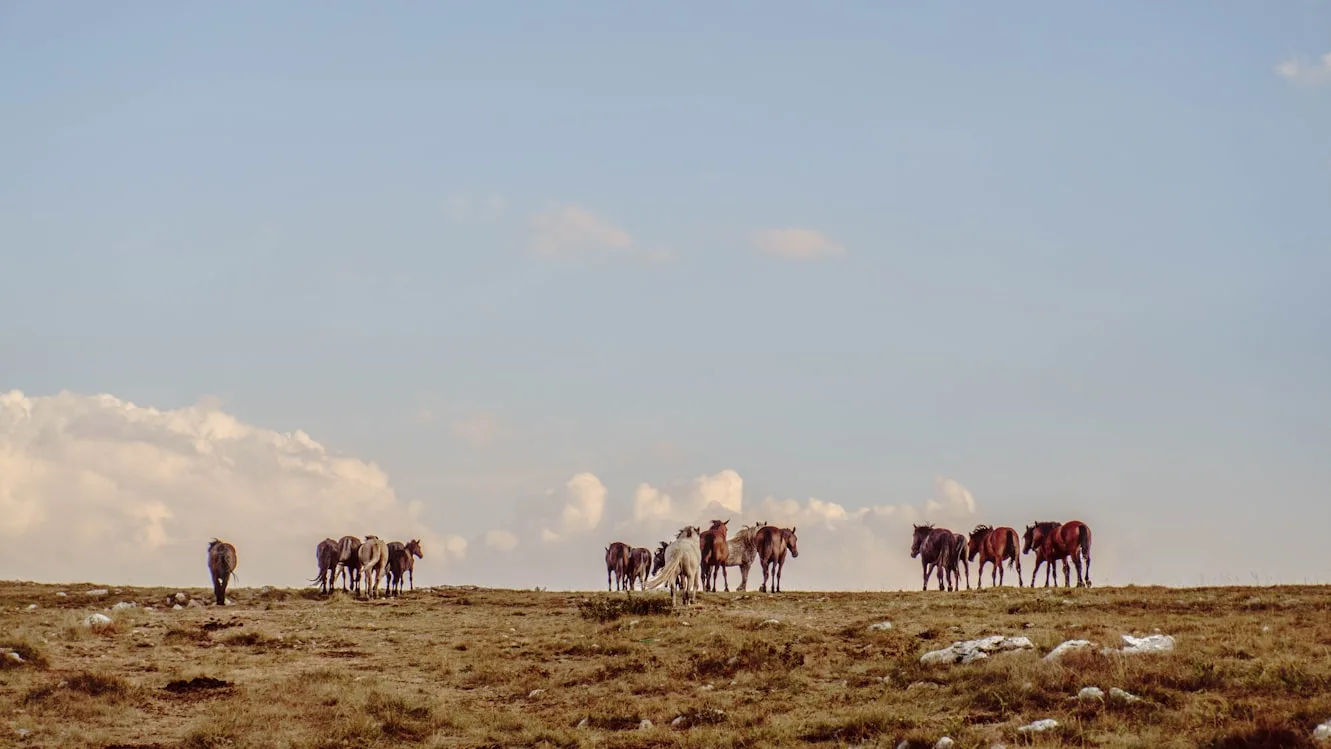
Livno is a town in western Bosnia and Herzegovina, roughly two hours from Sarajevo by road. The plateau that surrounds it — Livanjsko Polje — stretches across 405 square kilometres, making it one of the largest karst fields in the world. In spring it floods partially, turning sections into shallow lakes that mirror the sky. In summer it dries to open grassland. In winter it disappears under snow. The horses move across all of it, in all seasons, entirely on their own terms.
What Are the Livno Horses
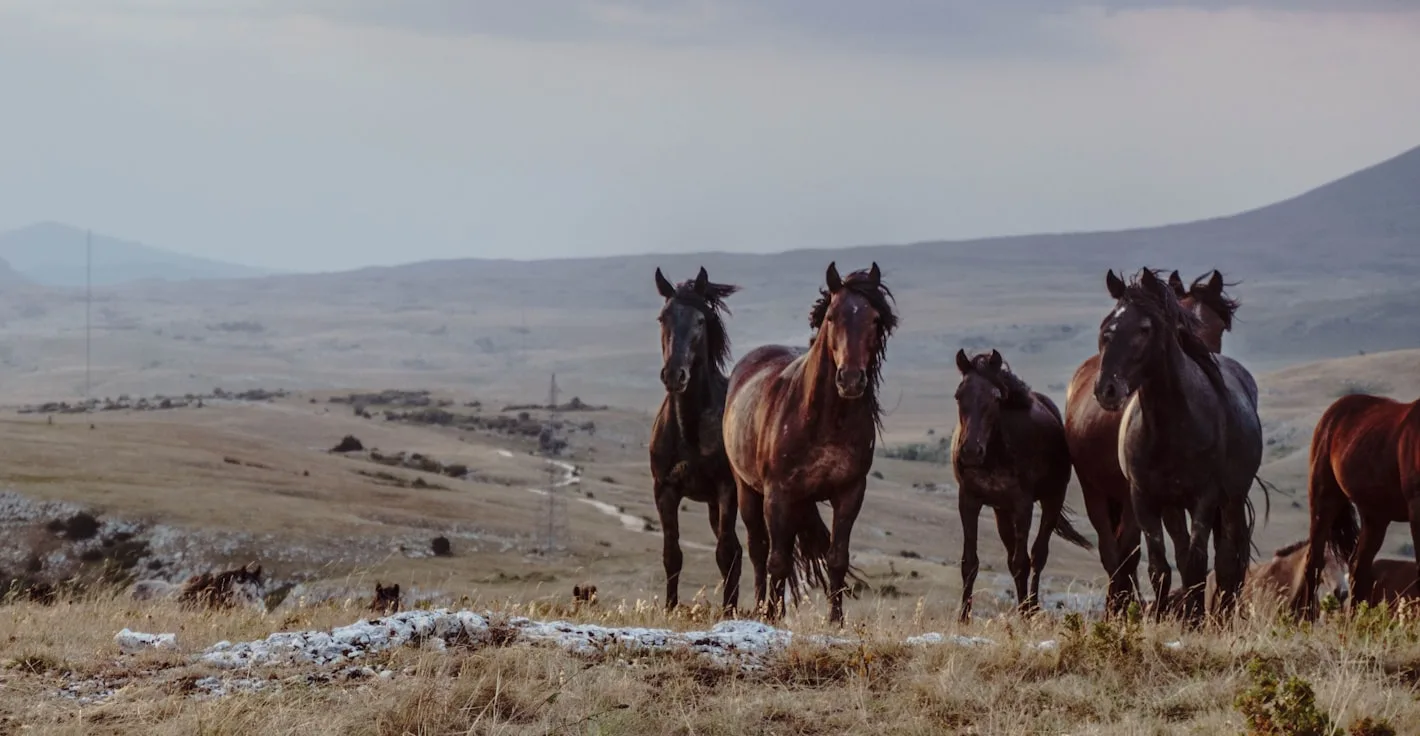
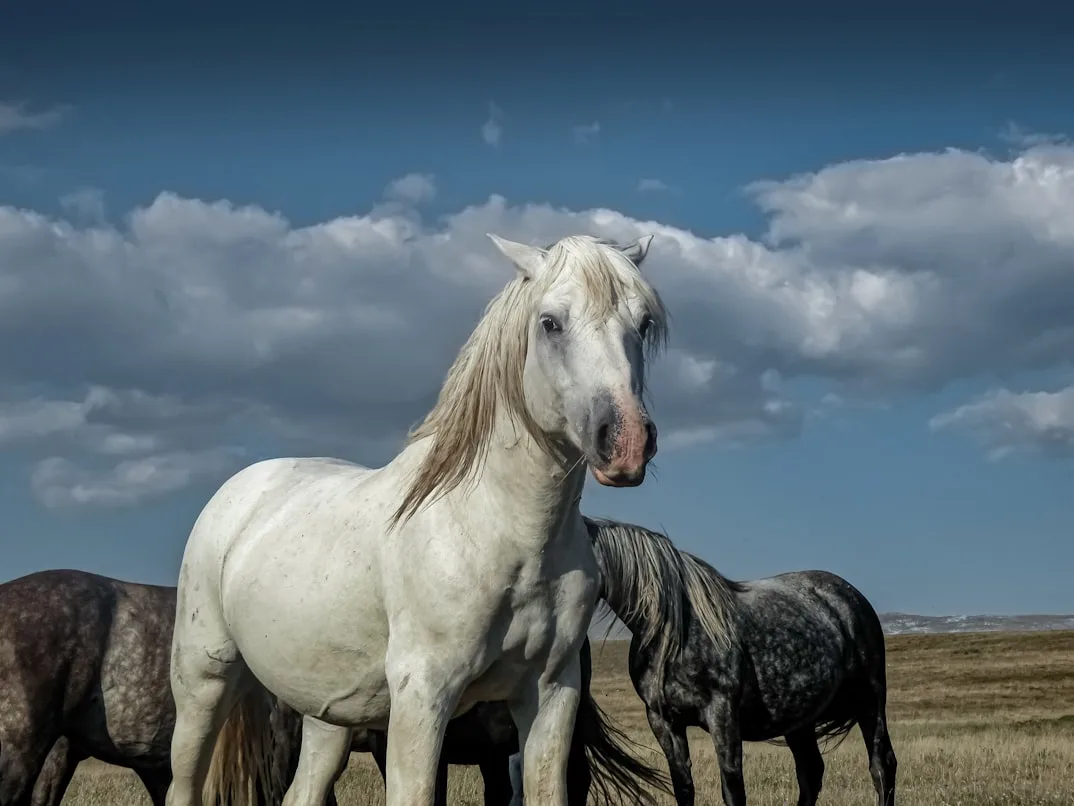
The horses of Livno are not truly wild in the strictest sense — they are feral, descended from domestic horses released or abandoned onto the plateau over generations. But the distinction matters very little when you are standing in an open field watching a herd of three hundred move together across a landscape that looks like it belongs in Central Asia rather than central Europe.
They are sturdy, short-legged, and completely indifferent to human presence unless you approach too closely. Stallions keep their herds together with a focused, quiet authority. Foals born in spring stay close to their mothers through summer. In autumn the plateau turns golden and the horses move slowly through it like something out of a painting that nobody commissioned.
The Livno plateau is one of the few places left in Europe where large animals move freely across open land without fences, roads, or management. What you are watching is not a nature reserve. It is simply nature.
The Plateau in Every Season
Spring is the most dramatic time to visit. Snowmelt and rain flood the lower sections of the plateau, creating temporary lakes that attract migratory birds in their thousands. White storks, herons, and waders feed at the water's edge while horses graze on the higher ground above the waterline. The light in April and May on the Livno plateau is the kind that photographers plan trips around.
Summer dries the plateau to open grassland and makes the horses easier to spot from a distance. The mountains that ring the field — Dinara to the west, Šator to the north — stay snow-capped into June. The air at this elevation is clean in a way that city air simply is not.
Autumn turns the grassland amber and brings a stillness to the plateau that is unlike any other season. The horses grow their winter coats and begin moving in larger groups. The light drops low and golden by mid-afternoon.
Winter closes much of the plateau under snow. The horses dig through it to reach the grass beneath — a behaviour that has been observed here for as long as anyone can remember. Visiting in winter requires preparation but rewards it completely.
Livno Beyond the Horses
The town of Livno itself is undervisited in a way that feels increasingly rare in Europe. Its old town holds a Ottoman-era fortress, a Catholic cathedral, and a history shaped by every power that has passed through the western Balkans. The Livno cheese — a hard, sharp sheep's milk cheese made in the surrounding villages — is one of the most distinctive regional products in all of Bosnia and Herzegovina, protected by geographical indication and impossible to replicate anywhere else.
The Livno area also holds the Tomb of Kara Mustafa Pasha and several medieval stećci — the mysterious monumental tombstones found across Bosnia that UNESCO recognised as a World Heritage Site in 2016. A full day in Livno and its surroundings gives you the horses, the plateau, the old town, and a cheese that will ruin all other cheese for you indefinitely.
Getting There & What to Know
Livno is approximately two hours from Sarajevo by car, crossing the mountains via the Ivan Sedlo pass and descending into Herzegovina before climbing again into western Bosnia. The drive is spectacular in its own right — the kind of road that reminds you why traveling by land through the Balkans is always the right decision.
There is no public transport connection that makes a day trip practical. A private vehicle or a guided day trip from Sarajevo is the most realistic option for most visitors.
The horses are most reliably found in the northern and central sections of the plateau, particularly around the village of Kovači. There are no fences, no viewing platforms, and no entry fees. You simply drive along the plateau road, stop when you see them, and walk slowly toward the herd until they decide how close is close enough.
Bring layers regardless of season. The plateau sits at elevation and the weather changes faster than the forecast suggests. Bring a camera with a long lens if you have one. And bring more time than you think you need — the Livno plateau has a way of making schedules feel irrelevant.