Srebrenica: What I Carried, and What History Still Carries
In July 1995, more than 8,000 Bosniak men and boys were murdered in and around Srebrenica — the first act legally recognized as genocide in Europe since World War II. I was there for one of the burials, years later, and I have never forgotten what I saw.
What Happened in July 1995
Srebrenica was a small mining town in eastern Bosnia that the UN Security Council declared a "safe area" in April 1993, meaning it was supposed to be protected from attack and demilitarized. By 1995, roughly 40,000 people were crowded inside the enclave, and it was guarded by only about 370 lightly armed Dutch peacekeepers.
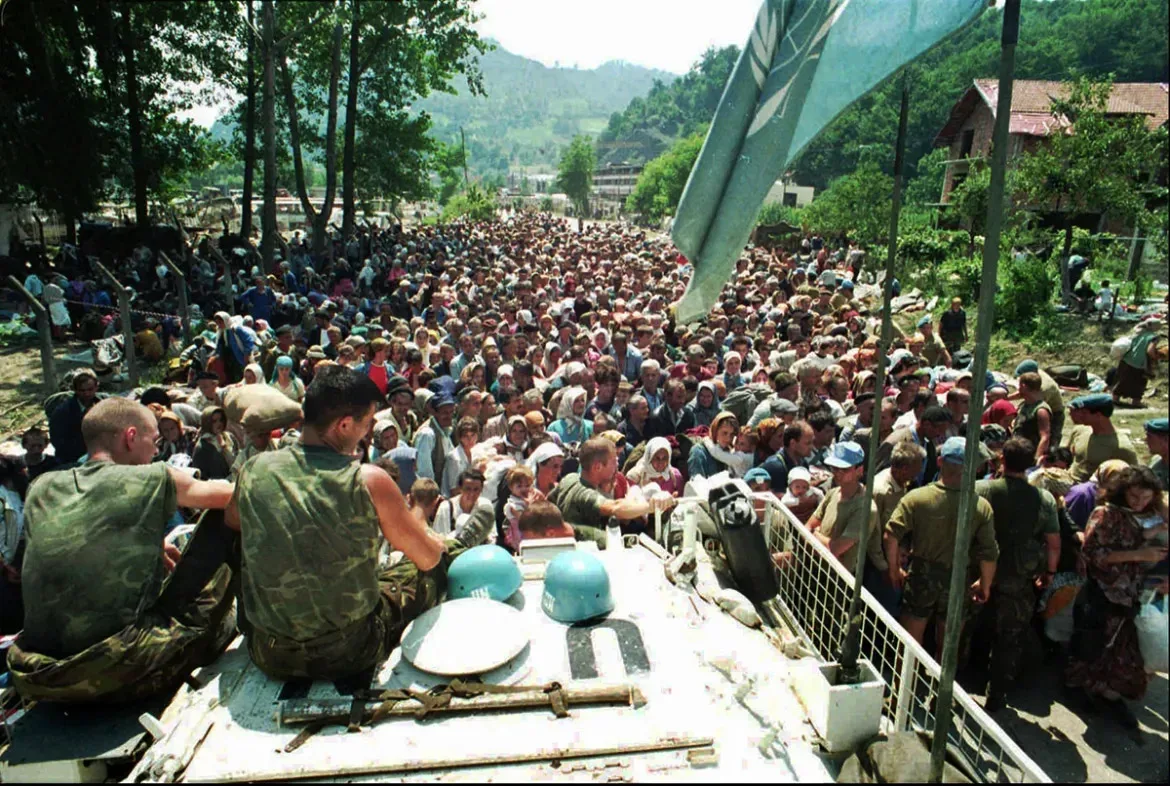
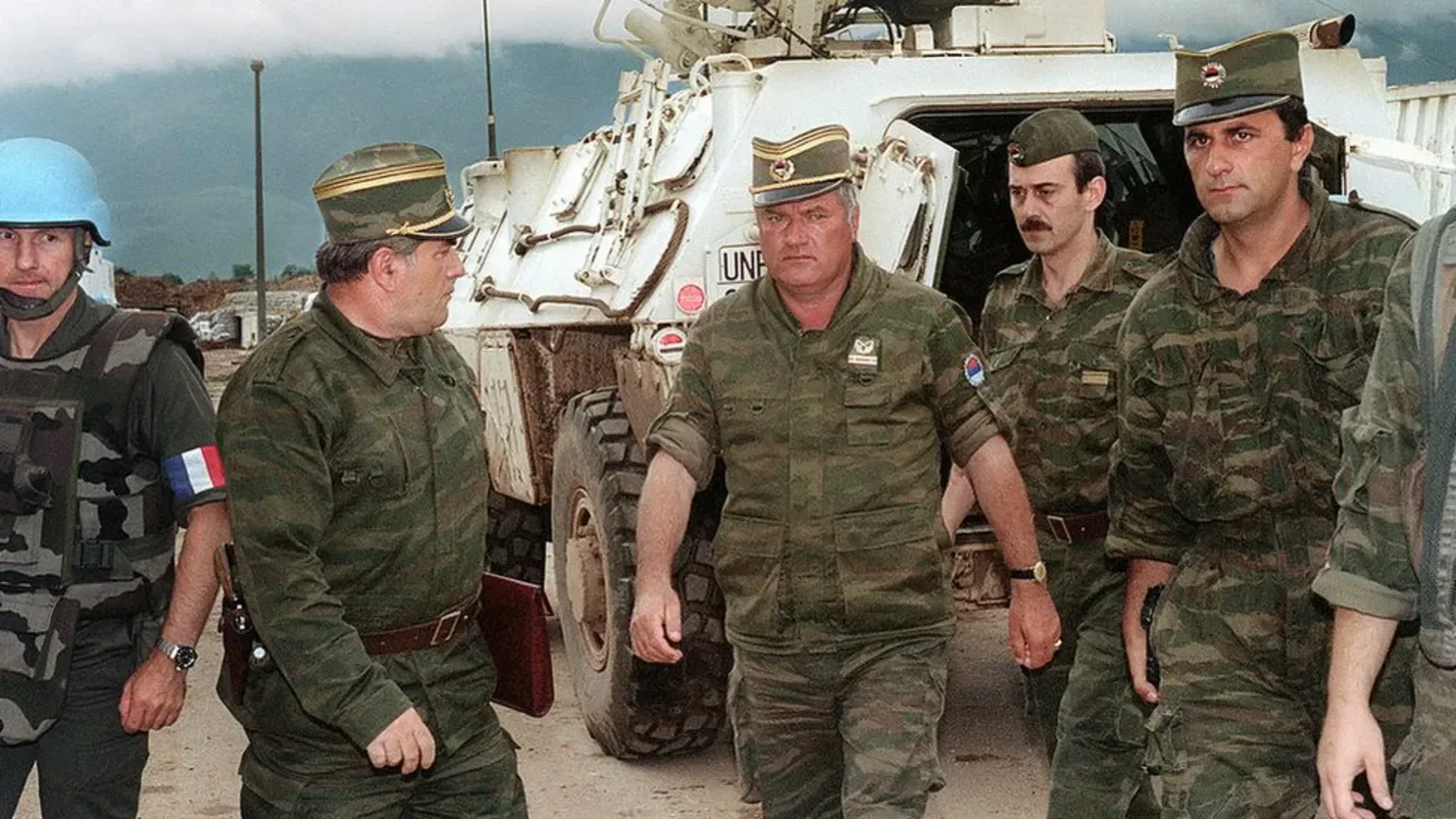
On July 6, 1995, forces of the Army of Republika Srpska, commanded by General Ratko Mladić, launched their final offensive, burning homes as they advanced. By July 11, the town had fallen. Tens of thousands of terrified residents fled north to Potočari, to the gates of the Dutch UN base, hoping the peacekeepers could protect them. They couldn't. Over the next two days, Bosnian Serb soldiers moved through the crowd separating men and boys — some no older than twelve — from the women, children, and elderly, promising they would only be "questioned for war crimes" and released.
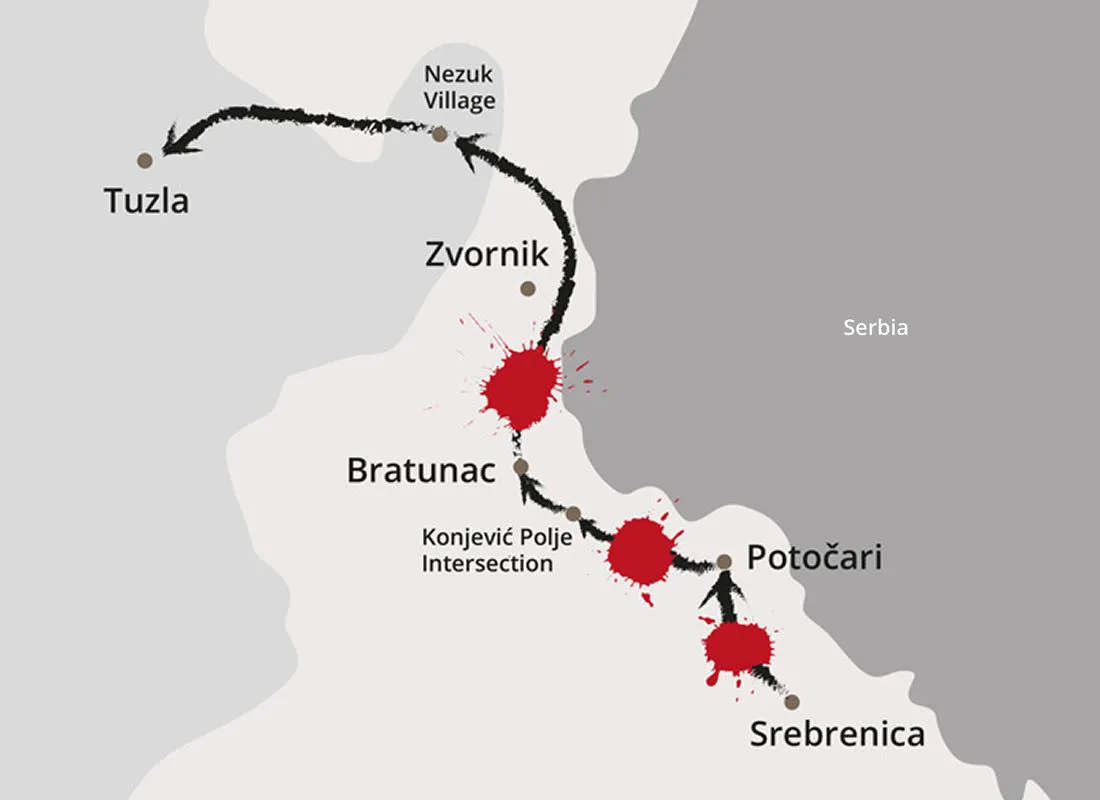
At the same time, a separate group of somewhere between 10,000 and 15,000 men and boys chose not to go to Potočari at all. They gathered at a place called Buljim Hill and set off on foot through the forest that same night, trying to reach Bosnian-held territory near Tuzla, about 100 kilometers away. Serb forces used stolen UN vehicles and uniforms taken from Potočari to pose as peacekeepers along the route, calling out to the column and convincing men to reveal themselves or surrender. Most who did were executed. Others were captured in ambushes, or killed in minefields as they tried to cross open ground. Fewer than a third of the men who set out ever reached Tuzla alive.
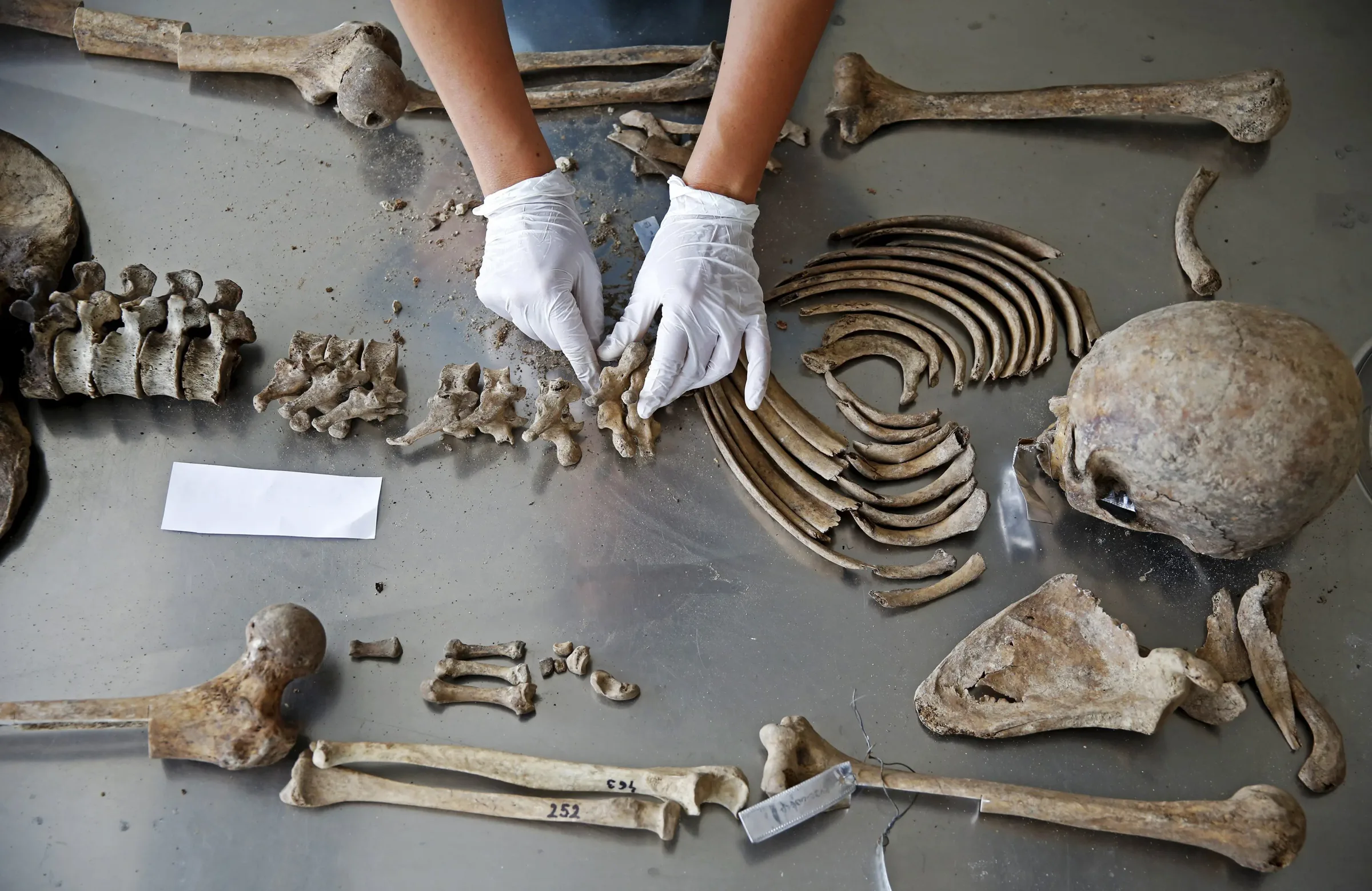
Those separated at Potočari and those captured from the column were taken to holding sites — schools, warehouses, farms — mostly around the nearby town of Bratunac. One of the largest single killing sites was an agricultural warehouse in Kravica, where more than a thousand men were shot in a single night. In total, more than 8,000 men and boys were murdered between roughly July 11 and July 19, and their bodies were buried in mass graves, many of which were later dug up and moved a second or third time in an effort to hide the evidence — which is part of why identification is still ongoing today, three decades later.
Who Was Responsible
Both the International Criminal Tribunal for the former Yugoslavia (ICTY) and the International Court of Justice ruled that Srebrenica was genocide — a planned, coordinated operation, not chaos or a battle gone wrong. Ratko Mladić and Bosnian Serb political leader Radovan Karadžić were both convicted and sentenced to life in prison. In total, sixteen people were convicted by the ICTY for crimes committed in Srebrenica. A Serb paramilitary unit called the Scorpions was also found to have taken part in executions — this came to light partly because one of their own members filmed it, and the footage was later used as evidence in court. None of this is contested history; it rests on forensic identification of victims, physical evidence from the graves, and more than a thousand witness testimonies given to the Tribunal.
Hatidža Mehmedović's Story
Hatidža Mehmedović lived in Srebrenica with her husband Abdullah and their two sons, Almir and Azmir. When the town fell, she was separated from all three of them as they joined the column heading for the forest. She later described her youngest son gripping her and begging her to go on without him — a moment she said she never stopped hearing in her mind.
She didn't just lose her husband and sons. Over the following days, she also lost both her brothers, her brother's two sons, her sisters' sons, and cousins and their children — by her own account, there was no one left in her family to kill. She boarded a bus out of Potočari on her third attempt, believing the men would follow within days. Instead, on November 13, 1996, more than a year after the war ended, she got the phone call confirming that remains believed to belong to one of her children had been found in a mass grave.
She waited another fourteen years, hoping more of her husband's and eldest son's remains would surface. In 2010, she finally buried Abdullah, Almir, and Azmir together at the Potočari Memorial. In 2003, she had already returned to live in Srebrenica — one of the first survivors to do so — and fought to reclaim the family home that had been occupied by a Serb family during the war. She went on to found the Mothers of Srebrenica association, which supported other women searching for their families and pushed forward the lawsuits against the UN and the Dutch state for failing to protect the town.
The March of Peace
Every year since 2005, in the days before the July 11 anniversary, thousands of people walk the Marš mira — the March of Peace. It follows the same route as the 1995 death march, but in reverse: starting in the village of Nezuk near Tuzla and ending three days later in Potočari, roughly 100 kilometers of forest, hills, and riverbanks, much of it still marked with old mass grave sites along the way. Survivors of the original column often lead it. People walk mostly in silence.
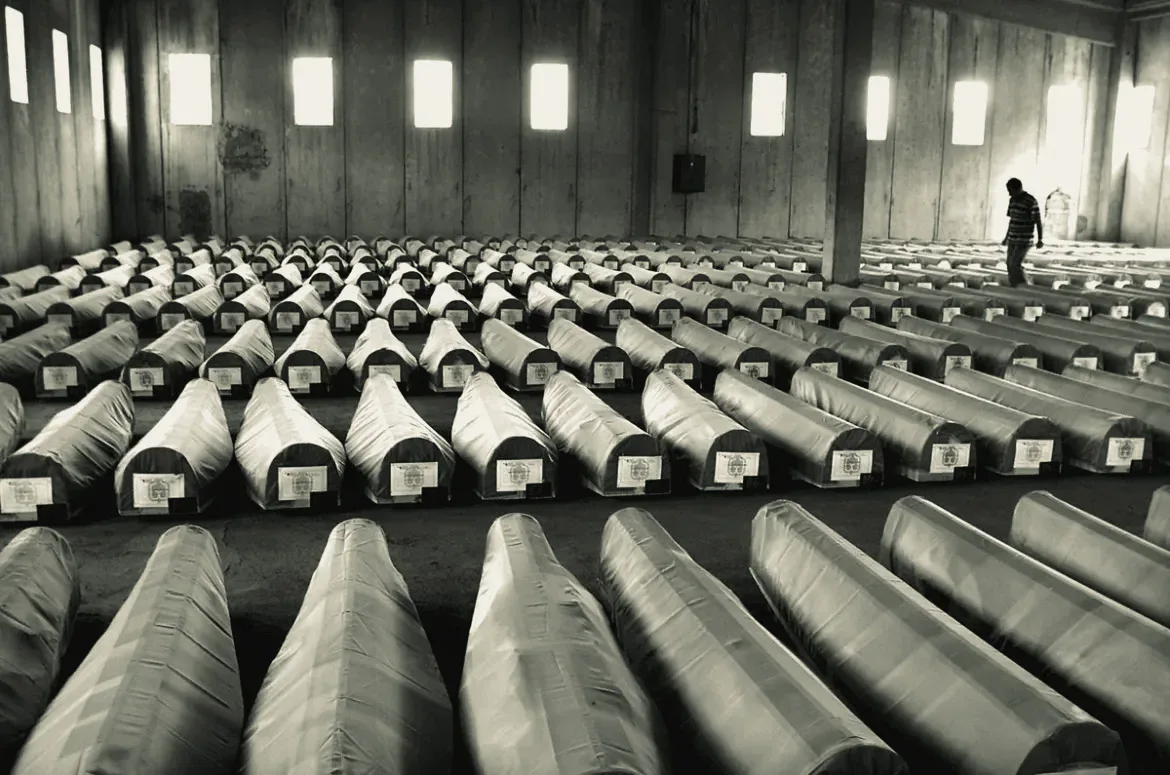
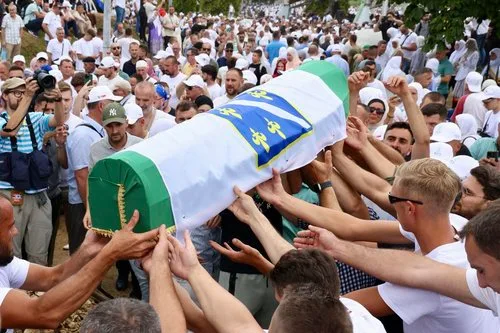
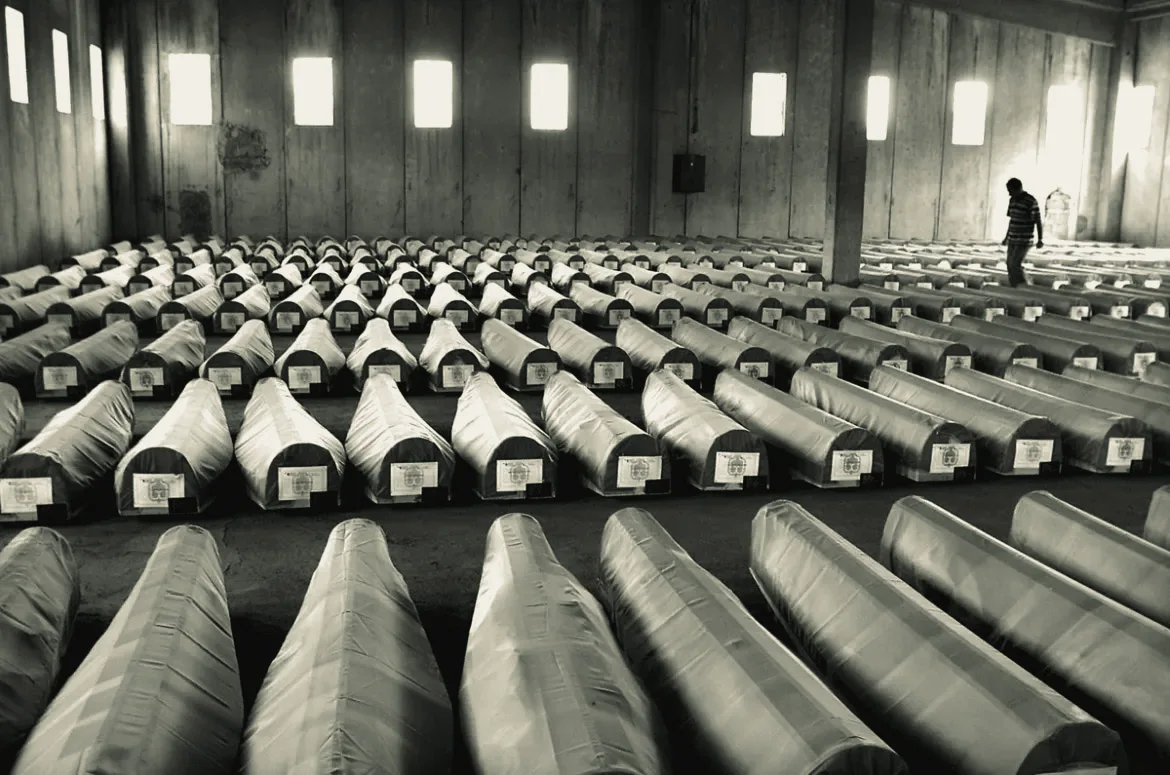
The march arrives in Potočari a day before the anniversary, and on that final evening, it's tradition for male participants to help carry the coffins of that year's newly identified victims from where they're stored to the memorial cemetery — the same coffins that are buried the next morning, on July 11. Munira Subašić of the Mothers of Srebrenica has described the march simply as a bridge between the living and the dead. Every year, the number of coffins depends entirely on how many victims forensic teams managed to identify from the mass graves that year — some years it's a few dozen, some years several hundred.
Route of escape for the Srebrenica civilians
A Coffin I Helped Carry
I was eighteen, maybe nineteen, when I went to Srebrenica with my father and one of his friends for one of those annual burials. I don't know the exact count that year, but it felt like around 300 coffins were being laid to rest. I remember the scale of it before anything else — thousands of people, rows of coffins waiting to be carried from the tents where they were kept to the graves where they'd finally be buried, some of these men killed twelve or fifteen years earlier.
There was one man there that day who had lost his entire family — not one or two relatives, but five or six coffins were his alone. In Bosnian Muslim tradition, it's usually the closest family member who carries their loved one to the grave. He had no one left to share that with, so he did it by himself, again and again, walking back and forth between the tents and the burial site.
I tried to help him. The third or fourth time I saw him coming back for another coffin, I stepped in and carried it with him. I lasted maybe three minutes before my hands went completely numb. That's when it hit me — this man had been doing this, coffin after coffin, for far longer than three minutes, without a single complaint. Just quiet, unbelievable strength, and sadness in his eyes that I couldn't come close to matching, even once. I think about that day every time July comes around.
Why This Still Matters on a Tour
In thirteen years of doing this work, I've witnessed so much. There have been so many moments where people are crying, and where I'm crying right along with them, because of what this war and its aftermath did to this country. My goal has never been to shock anyone. It's simply to face the harsh reality of what happened here in 1995, honestly and directly.
One of the tours that stays with me most was one I led for Remembering Srebrenica, an organization from the UK. On that trip, I met the Mothers of Srebrenica in person, and I was translating for the group in real time as they spoke. I remember how devastated I was in that moment — trying to hold the weight of their words in two languages at once, while everyone around me, including me, was breaking down. Moments like that don't leave you. They come with an obligation: to keep carrying this story, and to keep telling it to the rest of the world, so it's never reduced to a date in a textbook.